dr. Merim Jusufbegović, Faculty of Health Studies UNSA, Adna Softić, MSc, Verlab Institute
In the last decade, educational systems have undergone a significant transformation driven by the development of digital technologies, artificial intelligence, advanced visualization, and additive manufacturing. Among these technologies, 3D printing stands out in particular, which was originally developed for the needs of industry and engineering, but quickly found application in medicine, science, and education.
The integration of these technologies into the educational process is carried out through the development of educational materials, workshops, and laboratory activities that enable students to work practically with advanced technologies, while at the same time strengthening cooperation between the academic sector and industry. Such initiatives are aligned with European strategic documents such as the EU Skills Agenda and the Pact for Skills initiative, which emphasize the need for the development of digital, technical, and interdisciplinary competencies, as well as lifelong learning as key factors for the competitiveness and sustainable development of European society.
In Bosnia and Herzegovina, interest among educational and research institutions is growing for the integration of these technologies into the teaching process. Projects such as the Improvement of education in technical medicine for personalized 3D printed breast prostheses at higher education institutions of the Western Balkans (TechMed3D) contribute to the development of new learning methods that connect medicine, engineering, and digital technologies, creating a modern educational environment aligned with the needs of future professionals.
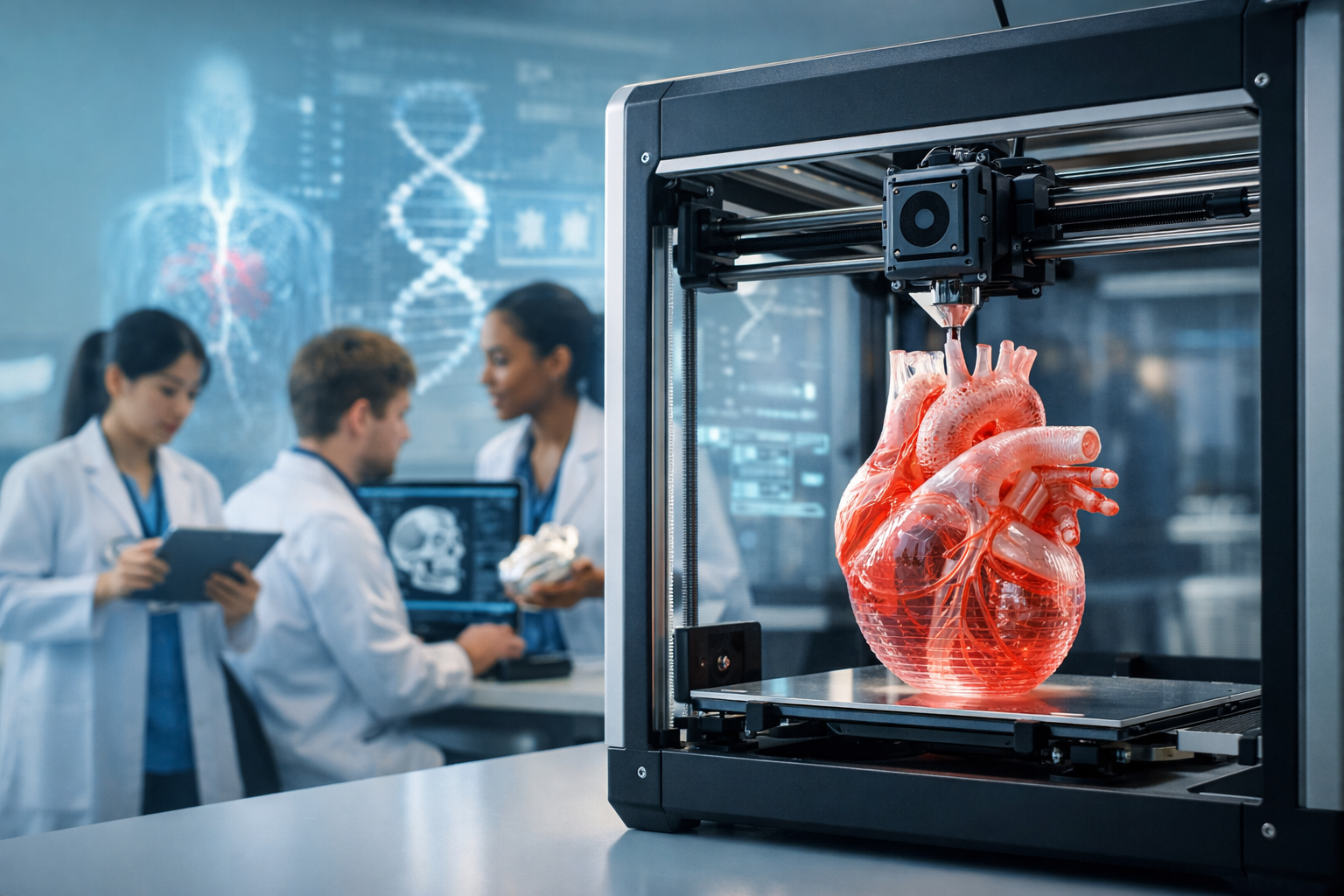
3D printing, also known as additive manufacturing, represents the process of creating physical objects layer by layer based on a digital three-dimensional model. Unlike conventional manufacturing methods that are based on material removal, the additive process involves its gradual addition, thereby forming the desired object. The digital model can be generated by modeling in CAD software, reconstruction of medical images such as CT or MRI data, 3D scanning of existing objects, or by using digital model libraries. After preparation in specialized software, the model is converted into instructions that the 3D printer uses to build the object using materials such as polymers, resins, or metals.
The application of 3D printing in education enables a significant improvement in understanding complex three-dimensional structures that are characteristic of disciplines such as medicine, biology, and engineering. Physical models allow students direct spatial analysis of anatomical and functional relationships between structures, which significantly facilitates the learning process compared to traditional two-dimensional illustrations. Involving students in the process of model creation, from the analysis of medical images to the production of a physical model, further increases the interactivity of teaching and enables the development of interdisciplinary competencies that include medicine, engineering, informatics, and data processing.
3D printed models enable the planning of complex operations on an accurate replica of the patient’s anatomy before the procedure itself, thereby significantly reducing the risk of complications.
A particularly significant application of 3D printing is present in medical education, where students must master the complex anatomy of the human body. Traditional approaches rely on anatomical atlases, models, and cadaveric specimens, whose availability may be limited. 3D printing technology enables the creation of realistic anatomical models of bones, blood vessels, organs, tumors, fractures, or aneurysms, often reconstructed directly from patient medical images. Such models can be used for learning anatomy, planning surgical procedures, simulation of medical procedures, and patient education.
The introduction of 3D printing into the educational system also encourages the development of new teaching content and interdisciplinary subjects that include digital anatomy, medical 3D modeling, medical image processing, development of simulation models, and design of medical devices. Projects such as TechMed3D are focused on integrating these technologies into the educational process through the development of educational materials, workshops, and laboratory activities that enable students to work practically with advanced technologies, while at the same time strengthening cooperation between the academic sector and industry.
In addition to education, 3D printing has significant application in scientific research. In medical research, it is used for the development of simulation models, testing of medical devices, optimization of diagnostic procedures, and the development of personalized medical solutions. Particularly important are medical phantoms that simulate structures of the human body and are used for testing diagnostic equipment or optimizing radiological protocols without exposing patients to additional risks.
The introduction of such technologies into education contributes to the development of creativity, innovative thinking, and technical and digital skills among students. Practical work with advanced technologies increases motivation for research work and can encourage the development of new generations of experts in the fields of medicine, engineering, and biomedical technologies. As the technology becomes more accessible, its wider application in educational institutions is expected, including integration with virtual and augmented reality, the development of personalized educational materials, and even more realistic medical models. 3D printing thus represents an important bridge between education, science, and technological innovation.
Within the European initiative Pact for Skills, the BRIGHTskills project organizes expert focus groups dedicated to digital transformation, artificial intelligence, regulatory aspects, and sustainability of the healthcare industry, with the aim of aligning workforce competencies with the needs of the modern labor market.
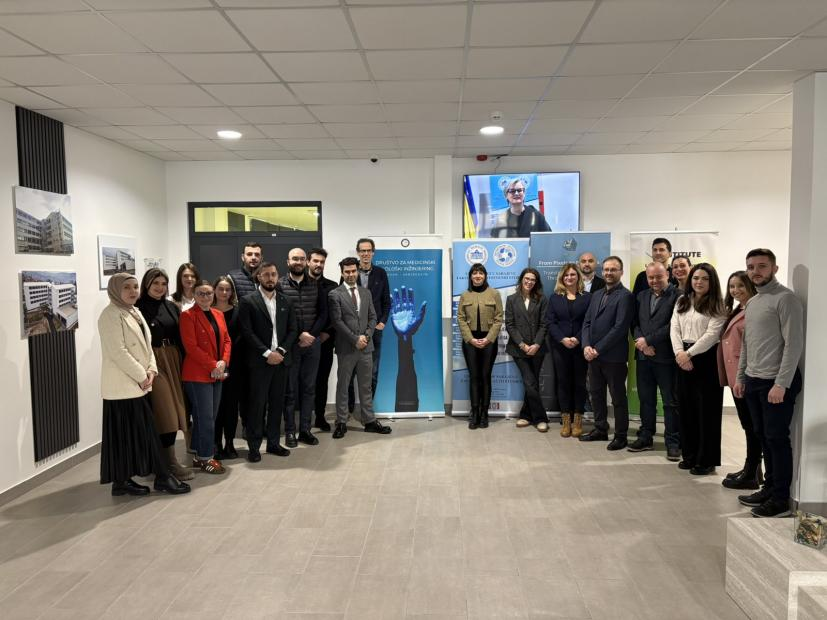
The TechMed3D project has been launched — a three-year Erasmus+ initiative that introduces innovations of 3D printing into medical education and healthcare practice through interdisciplinary cooperation.
Additionally: Successful TechMed3D kick-off meeting